An operator who makes
change hold.
On seeing the connections, building a business while raising
a family, and why I believe better systems
should make better lives possible.
READ MY STORY
HELLO, I'M BOKAMOSO KUMWENDA
I've always loved seeing the connections.
I don't really remember when it started. I've just always been curious about how things work, why they work the way they do, and how seemingly unrelated things fit together.
Even when I worked in public health project management, I found myself interested in the connections beneath the surface.
How conversations within families reflected deeply held cultural beliefs. How those beliefs shaped what was happening within communities. And how those community experiences connected to much bigger challenges at a national level.
I was fascinated by the patterns.
And I've carried that way of thinking into almost everything I've done since.
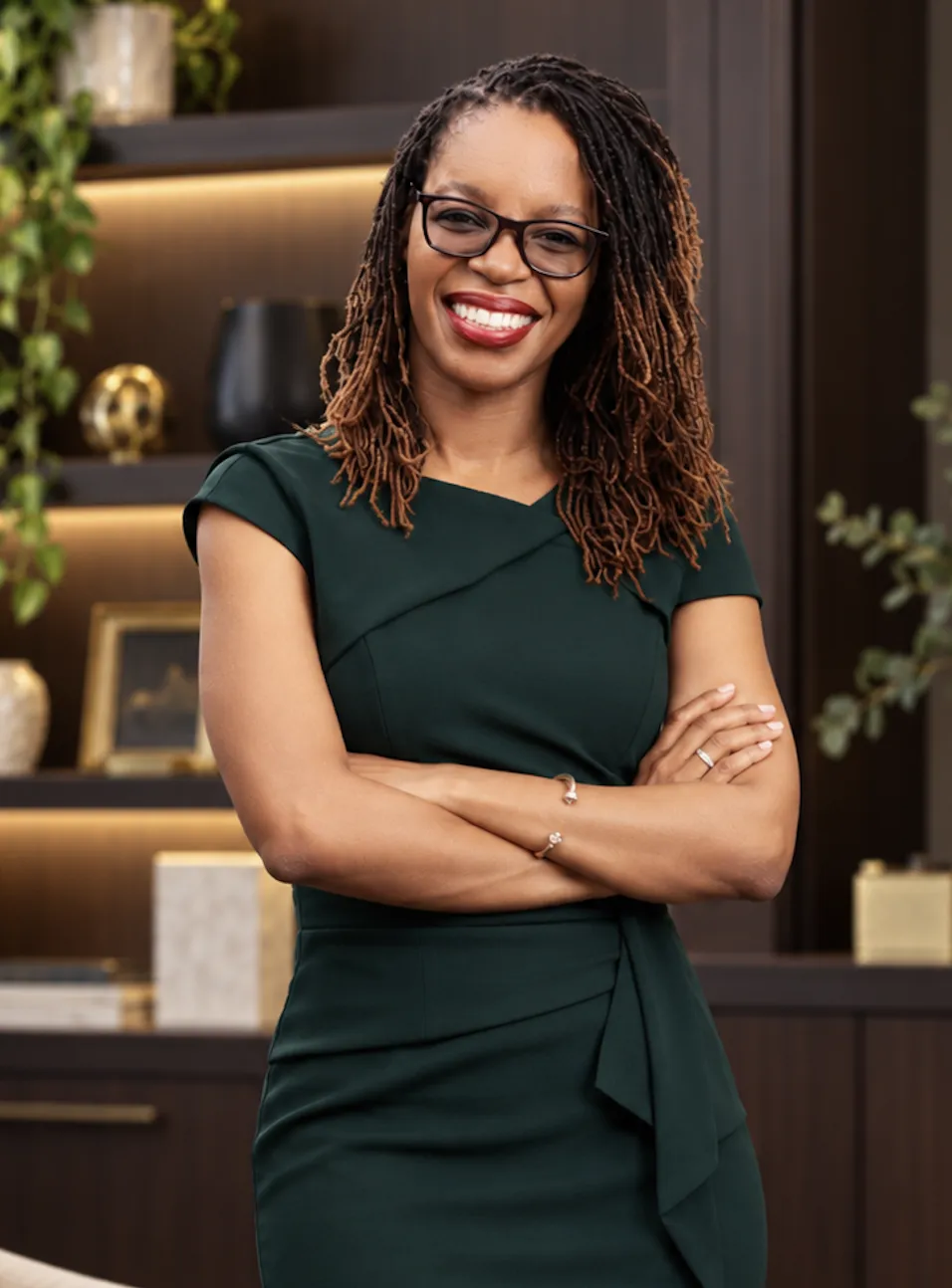
BOKAMOSO KUMWENDA
FOUNDER & SYSTEMS THINKER
01 / THE BEGINNING
Building a business.
And a life.
But I think my relationship with systems became much more personal when I started
my own business.
At the time, I was making and selling jewellery, and my children were very young.
I had big ambitions for the business. I loved creating, and I wanted to see what I could build.
But there was another part of my life that mattered just as much: my family.
And if you've ever tried to build a business while raising young children, you'll probably understand
the tension I'm talking about.
There's always something that needs your attention. Always something that could be done. Sometimes it
feels as though giving more to one part of your life inevitably means taking something away from another.
I didn't want to build a successful business only to find that I had no time or energy left for the people
I was building it for.
So I started looking for another way.
What genuinely needed me?
Making the jewellery? Absolutely. That was creative work that required my
full attention.
But what about communicating with customers? Following up on enquiries? Marketing?
Managing the little administrative details that quietly consume so much of a
business owner's day?
Surely there had to be a better way to manage those things.
So I started building systems around them. Nothing particularly glamorous. Just
practical ways of making the business run more smoothly without needing my attention at
every turn.
And something clicked.
The right systems could give me
something more valuable than
efficiency. They could give me capacity.
Capacity to create. To think. To grow. And to be present for my family.
02 / A WIDER PURPOSE
It wasn't just my experience.
As I connected with other entrepreneurs, particularly women who were also wives and mothers,
I began recognising a familiar story.
These were ambitious, capable women who wanted to build something meaningful
in the marketplace. But they were carrying a lot.
They wanted to give their businesses their best, and they wanted to give their
families their best, too. Often, they were trying to do both with whatever time and energy
remained at the end of the day.
I kept coming back to the same thought:
What if the business itself could be
designed differently?
What if growth didn't have to mean doing more and more yourself?
What if the processes, knowledge, and everyday decisions that kept a business running
could be organised so that other people, and eventually technology, could carry some of
that responsibility?
That's where my passion for building better business operations really took shape.
Not because I think everyone should be obsessed with productivity.
Quite the opposite.
I believe we need better systems so that we can spend less of our
lives trying to hold everything together.
A LITTLE ABOUT MY BACKGROUND
The work
behind the
words.
Alongside my experience as a founder, I've spent my career helping organisations coordinate complex work, improve processes, and guide teams through change.
From plans to practice.
I've coordinated online events with hundreds of attendees worldwide, supported remote teams adopting new systems, and worked across standard operating procedures, process improvement, automation, and custom AI assistants.
Those experiences have reinforced something I believe deeply: implementation isn't the finish line. It's what continues to work afterwards that matters.
My qualifications inform my practice. But listening carefully, understanding how people actually work, and staying with the change until it takes root are just as important.
HOW I APPROACH THE WORK
Tools don't change businesses.
Adoption does.
And now, there's AI. It's an extraordinary time to be building a business. But for many founders, every new platform and promise adds to the noise. The question becomes: where on earth do I begin?
That's why I don't start with tools. I start by understanding the business: how work flows, where things get stuck, what depends too heavily on one person, and what could be simpler.
Once the foundation is clear, we can decide what needs documenting, what can be improved, and where automation or AI might genuinely help.
Introducing a tool is often the easy part. Helping people adopt a better way of working and making sure it lasts, is where the real work happens.
SYSTEMS FIRST. TECHNOLOGY SECOND. PEOPLE ALWAYS.
WHAT I BELIEVE IN
Principles I come back to.
Not a checklist of corporate values.
Just the things
I try to bring into the work, and the way
I want people to experience it.
Restorative Operations
Good operations should restore capacity, not continually demand more of it. The right systems reduce unnecessary pressure and create room for focused, meaningful work.
Hospitality
Every business has its own context, culture, and ambitions. I begin with curiosity and care, designing around the people who will actually use the systems.
Generosity
I believe in sharing knowledge and building capability. I want founders and teams to leave more confident and independent, not more dependent on me.
A THOUGHT TO LEAVE YOU WITH
A business that can
hold your ambition
without consuming
your life.
My name, Bokamoso, means future in Setswana. I've always thought that was
a fitting connection to the work I do.
I'm interested in what becomes possible when a business works better:
a founder who can step away, a team that feels confident, clients who experience consistent care,
and growth that doesn't ask everyone to stretch themselves endlessly.
I believe in ambition, excellent work, and building things we're proud of. I just
don't believe pursuing those things should require sacrificing everything else
that matters.
That's the future I care about building.
— Bokamoso


Copyright 2026. Bokamoso Kumwenda Consulting. All Rights Reserved.